
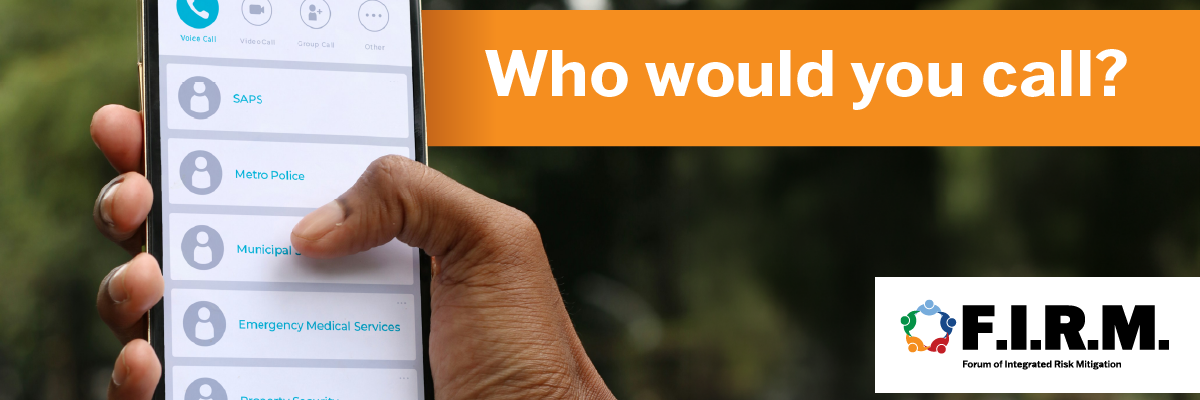
Someone discovers a theft at the office or A vehicle blocks the entrance to your complex. These are familiar problems, but they do not all need the same response. Between SAPS, metro police, private security and municipal services, knowing where to start can sometimes feel less obvious than the problem itself.
The South African Police Service, or SAPS, is responsible for preventing, combating and investigating crime, maintaining public order and protecting people and property. If you discover that equipment has been stolen from your business, reporting it to SAPS starts the formal police process. Informing building management or your security provider can help with the response at the premises, but that notification should not be assumed to have opened a police case. Source: SAPS functions.
The urgency of the situation matters too. A theft discovered after everyone has left the premises is different from an armed robbery happening now. SAPS identifies 10111 as its police emergency number and directs less urgent complaints and general enquiries to the nearest police station. When calling about an emergency, explain where it is happening, what is happening and whether anyone is in immediate danger. A precise address, nearby intersection or recognisable landmark helps the operator understand the location. Source: SAPS emergency call guidance. Source: SAPS emergency call guidance.
Metro police have a different, though connected, role. Where a municipal police service operates, its core functions include traffic policing, enforcing municipal by-laws and preventing crime. In Johannesburg, these responsibilities sit with the Johannesburg Metropolitan Police Department, or JMPD. That means metro police work extends beyond issuing traffic fines: traffic obstructions and matters covered by local by-laws can also fall within their responsibilities. The appropriate reporting channel depends on the municipality and the nature of the complaint. Source: City of Johannesburg public safety mandate.
A faulty traffic light illustrates an important distinction. Officers may be needed to help manage a dangerous traffic situation, while the fault itself needs to reach the organisation responsible for repairing the signal. In Johannesburg, traffic-signal faults are reported through the City’s service-reporting channels for attention by the Johannesburg Roads Agency. Streetlighting faults follow a different route, through City Power. Elsewhere, residents should check their municipality’s official channels. Describing the problem accurately helps distinguish a request for traffic assistance from a request for maintenance. Source: City of Johannesburg fault-reporting guidance.
Private security is often the most visible point of contact at a shopping centre, office park or residential complex. Depending on the service provided, officers may manage access, patrol premises, monitor security systems and respond to incidents within their duties and lawful powers. If you discover damage to your parked car at a shopping centre, for example, notifying site security can help bring the incident to the attention of the people managing that property. Their role complements the public authorities, while a criminal complaint still needs to reach SAPS. Source: PSiRA guidance on private security roles.
Some situations involve several needs at once. A collision outside a business may require medical assistance, traffic management and help from site security to keep the property’s entrance clear. The useful starting point is to describe what has happened and what help is needed: whether anyone is injured, whether vehicles are obstructing the road and whether there is an immediate danger. Follow the emergency operator’s instructions rather than delaying a call while trying to work out every organisation that might eventually become involved.
The same approach helps with everyday problems in shared properties. A gate that has stopped working needs to reach the property manager, managing agent or body corporate, along with site security where access is affected. If there are signs of a break-in, the situation also needs police attention. One concern can therefore require both a maintenance response and a security response. Telling each recipient what has already been reported helps make those connections clearer.
A useful report gives the recipient something specific to work with. Include the location, when you noticed the problem, what you directly observed and whether it is still happening. Keep any reference number or acknowledgement provided, and use it when following up. A discussion in a community group can alert neighbours, but it should not be assumed to have reached an official reporting channel.
It is worth saving the verified contact details for your local police station, municipal services and relevant security or property-management team before you need them. Use official websites or information supplied directly by the organisation, and review those details occasionally. Local arrangements differ, so a contact list shared in another town may not serve your area.
F.I.R.M brings private sector stakeholders and law enforcement together around a shared commitment to safer communities. Understanding who does what supports that cooperation. Residents and businesses do not need to know every detail of how each organisation operates; knowing where to start, what to communicate and when another service is needed is already useful knowledge.
The next time something happens in your street, workplace or complex, begin with the practical questions: What has happened? Is anyone in immediate danger? What kind of help is needed? Those answers can make the first call more useful and help the people receiving it understand what needs to happen next.